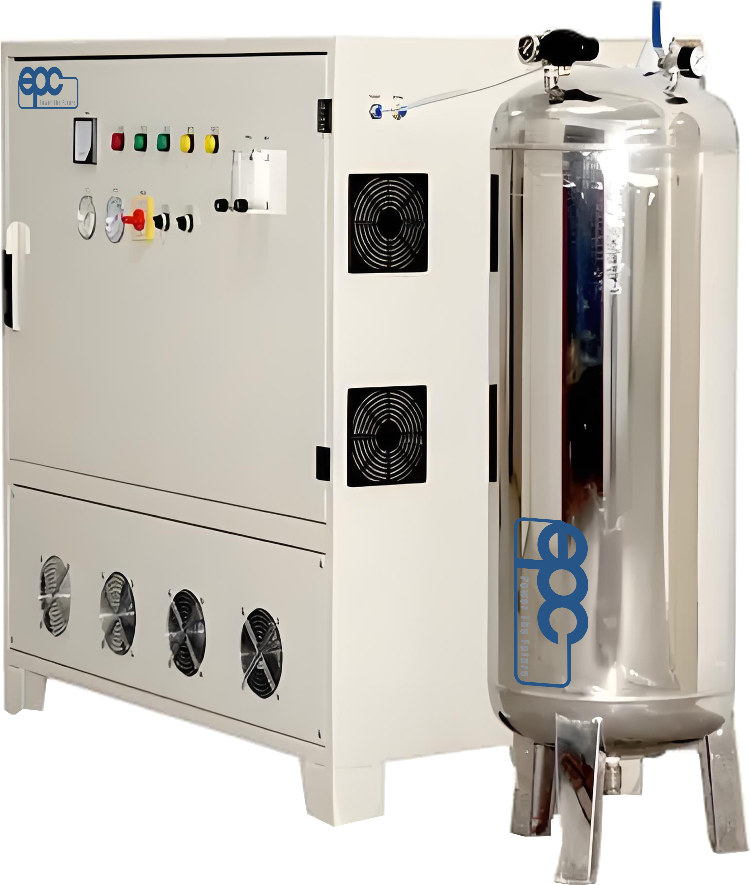
Fuel cell systems convert hydrogen and oxygen directly into electricity (and heat) through electrochemical reactions, enabling efficient and low-emission energy conversion. As the core unit of hydrogen-based power generation, they operate without combustion, offering high efficiency and fast response.
In engineering applications, a fuel cell system is not merely a power conversion device, but a coordinated system involving gas supply, thermal management, and control. Its overall performance depends on system integration and operating strategies, rather than individual cell performance.
EPC Energy provides fuel cell system solutions designed for real-world applications. Through system optimization and control strategy development, we ensure stable power output and long-term reliable operation across applications such as distributed energy, backup power, and microgrids.



Hydrogen power generation converts stored hydrogen into electricity (and heat) through fuel cells or hydrogen power systems, enabling the transition from energy storage to power supply. Its core value lies in transforming intermittent renewable energy into dispatchable and continuous electricity, ensuring a stable energy supply.
In practical applications, this process relies not only on energy conversion efficiency but also on the coordinated operation of gas supply, thermal management, and control systems. Through system integration and optimized operation, hydrogen power systems can deliver stable output under varying loads and operating conditions.