
CN | EN
Overview:

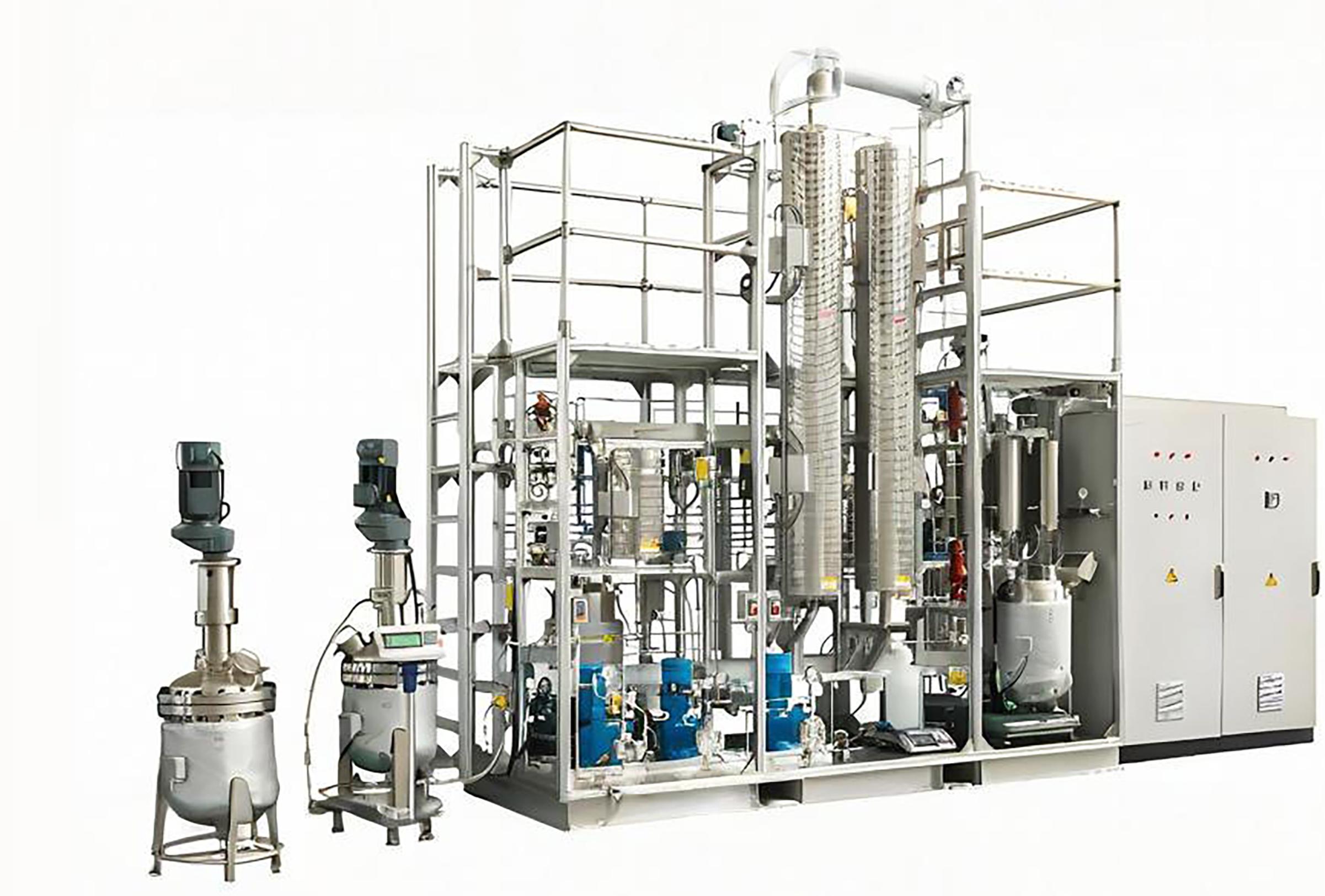
Sustainable Aviation Fuel (SAF) is a low-carbon aviation fuel produced from renewable energy and CO₂/H₂ feedstocks, enabling direct replacement of conventional jet fuel. Within the Power-to-X framework, SAF is typically synthesized via electrolysis-based hydrogen production, CO₂ conversion, and syngas formation, followed by Fischer–Tropsch or other synthetic routes, converting electrical energy into high-energy-density aviation fuel.

From an engineering perspective, SAF production requires the coordinated operation of multi-stage reactions and complex process units, including hydrogen generation, carbon conversion, synthesis, and refining. EPC Energy focuses on the industrialization of SAF, integrating electrolysis, CO₂ conversion, and synthesis systems into a complete solution, enabling reliable, scalable, and efficient production from feedstock to fuel.

System Components:

🟩CO₂ Capture and Purification — CO₂ is sourced from industrial flue gas, biogas tail gas, or direct air capture (DAC) and purified to ensure reaction stability.

🟦PEM/AEM Electrolyzer — Produces high-purity green hydrogen from renewable electricity.

⚗️Methanation Reactor — Converts CO₂ and H₂ to CH₄ at 300–400°C and 1–3 MPa, achieving >95% conversion.

💧Gas Purification and Conditioning — Methane is dried, impurities removed, and conditioned to pipeline standards.

⚙️Control and Heat Integration — Automated control, waste heat recovery, and safety monitoring enhance efficiency and operational stability.

描述
描述
Technical Parameters:

Parameters                                                                       Range
Jet Fuel Fraction Production Capacity            0.5–10 ton/d (expandable)
Process Route                                                  CO₂ → Syngas → FT → Fuel
Reaction  Temperature                                                  300–400℃
Reaction Pressure                                                          1–3 MPa
Single-pass conversion                                                     ≥98%
描述
Applications:
🏭Industrial Carbon Capture and Utilization (CCU) —— enables the conversion of industrial CO₂ emissions into valuable resources.
⚡Renewable Energy Conversion (Power-to-X) —— transforms wind and solar power into liquid fuels, supporting energy storage and consumption.
✈️Low-Carbon Aviation Fuel —— provides a sustainable alternative for the aviation sector, reducing emissions.
🔥Natural Gas and Liquid Fuel Substitution —— supports fuel replacement across multi-energy systems.
🏗Zero-Carbon Parks and Integrated Energy Systems —— build integrated electricity–hydrogen–carbon energy solutions.

Advantages:
✅End-to-End Engineering
✅System Integratio
✅High Conversion Efficiency
✅Modular & Scalable
✅Renewable Integration